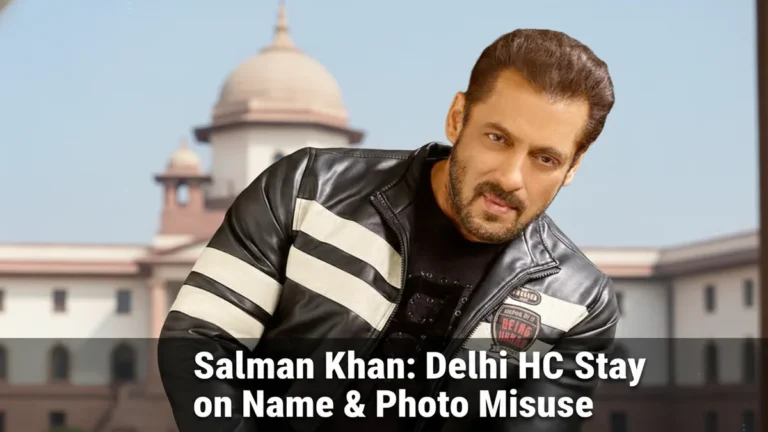

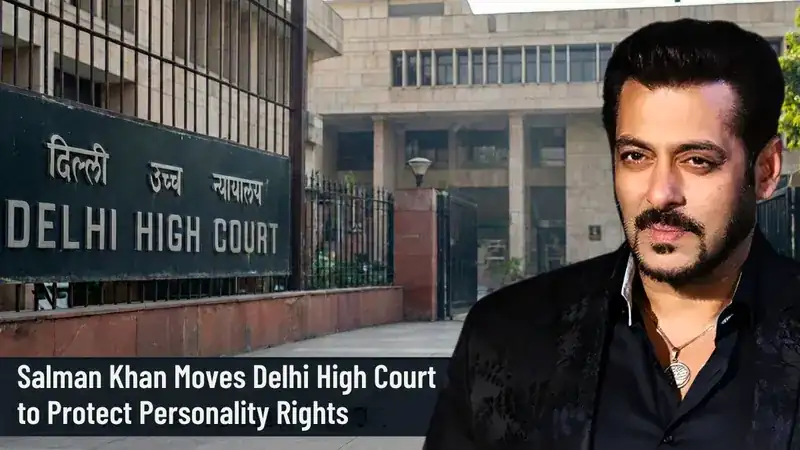
Bollywood actor Salman Khan has moved the Delhi High Court seeking legal protection of his personality rights, highlighting increasing concerns over the unauthorised use of celebrity identities in digital and commercial spaces. The petition reportedly aims to restrain unknown persons and entities from misusing his name, image, voice, likeness, and other distinctive attributes for commercial gain without consent.
The matter gains significance as courts across India, particularly the Delhi High Court, have been actively shaping jurisprudence around personality and publicity rights in recent years.
What Are Personality Rights Under Indian Law?
Personality rights, also referred to as publicity rights, allow an individual—especially a public figure—to control the commercial exploitation of their identity. These rights generally include protection over:
- Name and signature
- Photographs and visual likeness
- Voice and dialogue style
- Mannerisms and expressions
- AI-generated or deepfake representations
Although Indian law does not have a standalone statute for personality rights, courts have recognised them under the right to privacy guaranteed by Article 21 of the Constitution, as well as through the doctrines of passing off and unfair competition.
“Why Salman Khan Has Moved the Delhi High Court”
Salman Khan’s petition is understood to be directed against the rising misuse of celebrity identities across online platforms. Such misuse frequently takes the form of fake advertisements, misleading promotions, AI-generated videos, voice cloning, online games, NFTs, and social media content falsely implying endorsement.
By approaching the Delhi High Court, the actor is seeking preventive relief to curb present and future infringements, especially where identifying individual infringers may be difficult.
“Likely Reliefs Sought: Injunctions and Digital Takedowns”
In personality rights cases, petitioners usually seek:
- Injunctions restraining unauthorised commercial use
- Directions to social media platforms and intermediaries to remove infringing content
- ‘John Doe’ or ‘Ashok Kumar’ orders against unidentified offenders
- Protection against future misuse of identity
Such relief plays a crucial role in addressing the fast spread of infringing content in the digital ecosystem.
“Delhi High Court as the Hub of Celebrity Personality Rights Cases”
The Delhi High Court has emerged as a leading forum for personality rights litigation. In recent years, it has granted similar protections to public figures such as Amitabh Bachchan, Anil Kapoor, Jackie Shroff, and Daler Mehndi. These rulings have reaffirmed that a celebrity’s identity holds commercial value and is deserving of legal protection.
Salman Khan’s move further strengthens this evolving legal trend.
“Not a Ban on News, Criticism or Fan Activity”
Importantly, personality rights protection does not restrict legitimate journalism, fair criticism, satire, parody, or non-commercial fan engagement. The focus remains strictly on preventing deceptive and unauthorised commercial exploitation that misleads the public and harms the individual’s economic and reputational interests.
“A Key Legal Signal in the Age of AI and Deepfakes”
Salman Khan moving the Delhi High Court underscores the growing challenges posed by artificial intelligence and digital manipulation tools. As courts continue to adapt to technological realities, such cases are expected to shape clearer legal boundaries for the use of public identities in India.
Source: Bar and Bench